


What Tools Are Needed for Field Repairs on an ATV and UTV?
dirtsupply · · 5 min read
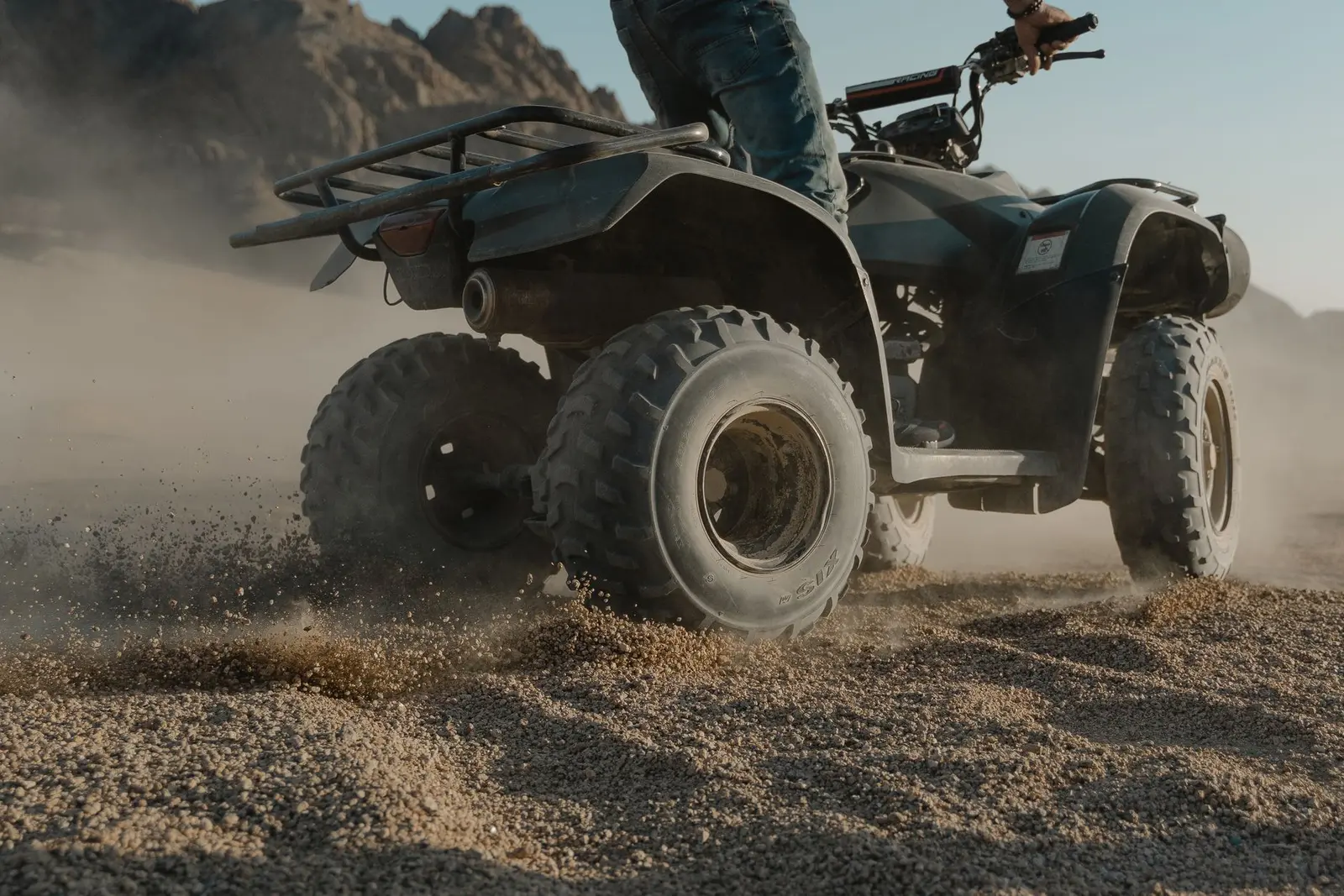
Off-road trails in Georgia often feature sharp rocks, deep mud, and steep climbs. Whether you are riding an ATV or UTV across the Trialeti Ridge, around Didgori, or along the rugged paths of Kazbegi, the nearest settlement is often tens of kilometers away. In such remote environments, a mechanical failure is far more than just a minor inconvenience—losing mobility creates genuine safety risks.
To avoid needing recovery or a tow truck in the mountains or deep forest due to a simple issue, preparation is key. Below, we answer the most frequently asked questions about the essential tools and gear you must pack before hitting the trail.
What Basic Mechanical Tools Should Be in a Trail Kit?
Every rider needs a compact, shockproof tool roll or bag tailored specifically to their machine's fasteners. Most American and Japanese models use metric hardware, although some American quads also feature standard imperial sizes.
Your field kit should definitely include:
- Wrench and socket set: The most common sizes are 8, 10, 12, 13, 14, 17, and 19 mm. It is best to pack a compact ratchet wrench with a matching extension bar.
- Torx and Allen (hex) keys: Body plastics, brake components, and steering hardware on modern SXS and UTV models are often secured with these fasteners.
- Combination pliers and wire cutters: Useful for fixing electrical wiring, cutting zip ties or wire, and adjusting loose pins or brackets.
- Multi-bit screwdriver: With both Phillips and flathead bits.
Such compact kits can typically be purchased in specialized shops in Tbilisi for around 120–250 GEL.
What Is Needed for Trailside Tire Repair?
On rocky Georgian trails, a punctured tire is the most frequent issue. Carrying a full-sized spare tire is not always practical for trail punctures and sidewall cuts, especially on an ATV. That is why a tire repair kit is an absolute necessity.
A trail tire kit should include:
- Tire plug kit with plugs and reamer/insertion tools: Sticky vulcanizing plugs allow you to seal a tread puncture without unmounting the wheel. These kits generally cost 25–50 GEL.
- 12-volt mini air compressor or CO2 inflators: A compact electric compressor plugged into the vehicle's battery or 12V socket will reinflate a tire in 3–5 minutes. Prices typically range from 80 to 180 GEL depending on quality.
- Low-pressure tire gauge: A dedicated low-pressure gauge is critical because off-road tires typically run between 0.4 and 0.8 bar, which standard automotive gauges cannot measure accurately.
If a tire sidewall tears, keep several heavy-duty zip ties and extra-thick plugs handy for a temporary stitch or patch so you can limp back to base safely.
Why Are a Spare CVT Belt and Belt Changing Tool Essential?
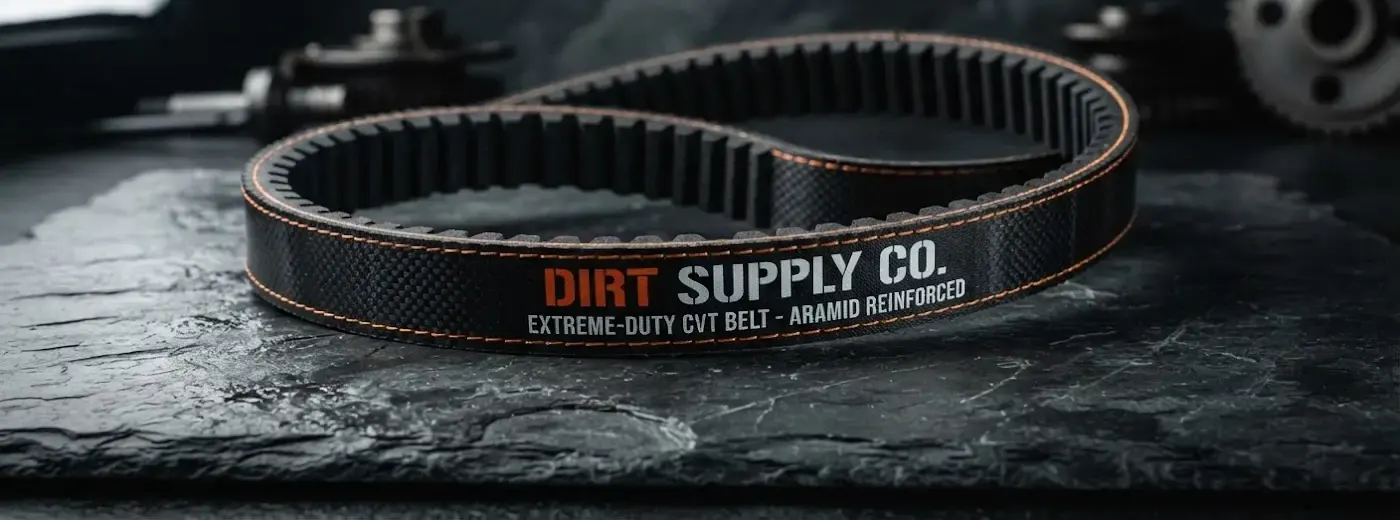
The CVT drive belt is one of the hardest-working components in the drivetrain. Getting bogged down in heavy mud, crawling up extended climbs, or riding in the wrong gear range can quickly cause the belt to overheat and fail. A snapped belt leaves your rig completely dead in its tracks.
To avoid being stranded on the trail, always carry:
- Spare CVT belt: Choose a heavy-duty belt specifically suited to your make and model.
- Clutch spreader tool: A dedicated tool or bolt designed to open the secondary clutch sheaves, without which installing a new belt is nearly impossible.
- Clutch cover socket: Typically a thin-walled 8 mm or 10 mm socket, ideally with a flexible extension, as clearance around lower clutch cover bolts is often very tight.
It is also wise to carry a clean rag and a small brush to thoroughly clean out shredded belt debris and cord fibers from the clutch housing before fitting the new belt.
What Extra Equipment Is Needed for Winch Recovery?
Having a winch alone is not enough if you lack the essential recovery rigging. Often, the nearest anchor tree is out of reach, or wrapping a bare cable around a trunk will damage nature and ruin your line.
For a trail ride, you should always pack:
- Tree saver strap: A wide synthetic strap that protects tree bark while preventing your winch rope from fraying or breaking. These cost roughly 40–90 GEL.
- Soft or bow shackles: Soft shackles are lightweight, safe, and eliminate flying metal hazards if a line snaps.
- Snatch block: This pulley doubles your winch's pulling capacity and allows for angled recoveries around obstacles.
- Heavy-duty work gloves: Crucial to prevent hand injuries when handling steel cable or synthetic winch rope under tension.
How to Store Tools Safely and Dry?
Weather changes rapidly in Georgia's mountainous regions. Mud, river crossings, and rain are the main culprits behind rusty tools. Therefore, never toss metal tools loose into an open cargo bed or rack.
Use waterproof, shockproof cases or heavy-duty soft bags secured firmly to your cargo racks. Heavy loose tools rattling inside a box will damage both your machine's plastics and the tools themselves. After every rough ride, take your tools out, dry them off, and lightly coat them with a protective lubricant spray.
If you plan to assemble or upgrade your trail kit, visit specialized off-road shops to pick out quality gear tailored specifically to your vehicle.