


Sintered vs Organic Brake Pads: Which Is Better for ATVs and UTVs?
dirtsupply · · 4 min read
For off-road enthusiasts, braking performance is not just a matter of comfort—it is the ultimate guarantee of safety and vehicle survival. When descending steep inclines or traversing muddy riverbeds, the braking system endures extreme loads. ATV and UTV owners often face a choice: opt for relatively inexpensive organic pads or invest more in sintered models?
To make the right choice, it is essential to understand how each material performs in real-world conditions, their lifespan, and their impact on the brake rotor.
What Are Organic Brake Pads and When Should You Use Them?
Organic pads (also known as resin pads) are manufactured by bonding various fibers, resins, and carbon-based materials. They come factory-installed on many lightweight quads, as they are perfectly adequate for casual, day-to-day riding.
Pros of Organic Pads:
- Smooth and Predictable Braking: When you squeeze the lever or press the pedal, engagement begins instantly without excessive effort.
- Quiet Operation: Organic friction material rarely produces squeaking or screeching noises while braking.
- Gentle on Rotors: Thanks to their softer compound, brake rotors experience minimal wear.
Cons:
- Fast Wear in Wet Conditions: Water, sand, and mud act like sandpaper against organic pads. A single extreme mud run can wear them down completely.
- Brake Fade Under High Temperatures: During long downhill descents where the brakes are constantly applied, organic materials heat up, significantly reducing stopping power.
What Are Sintered Brake Pads?
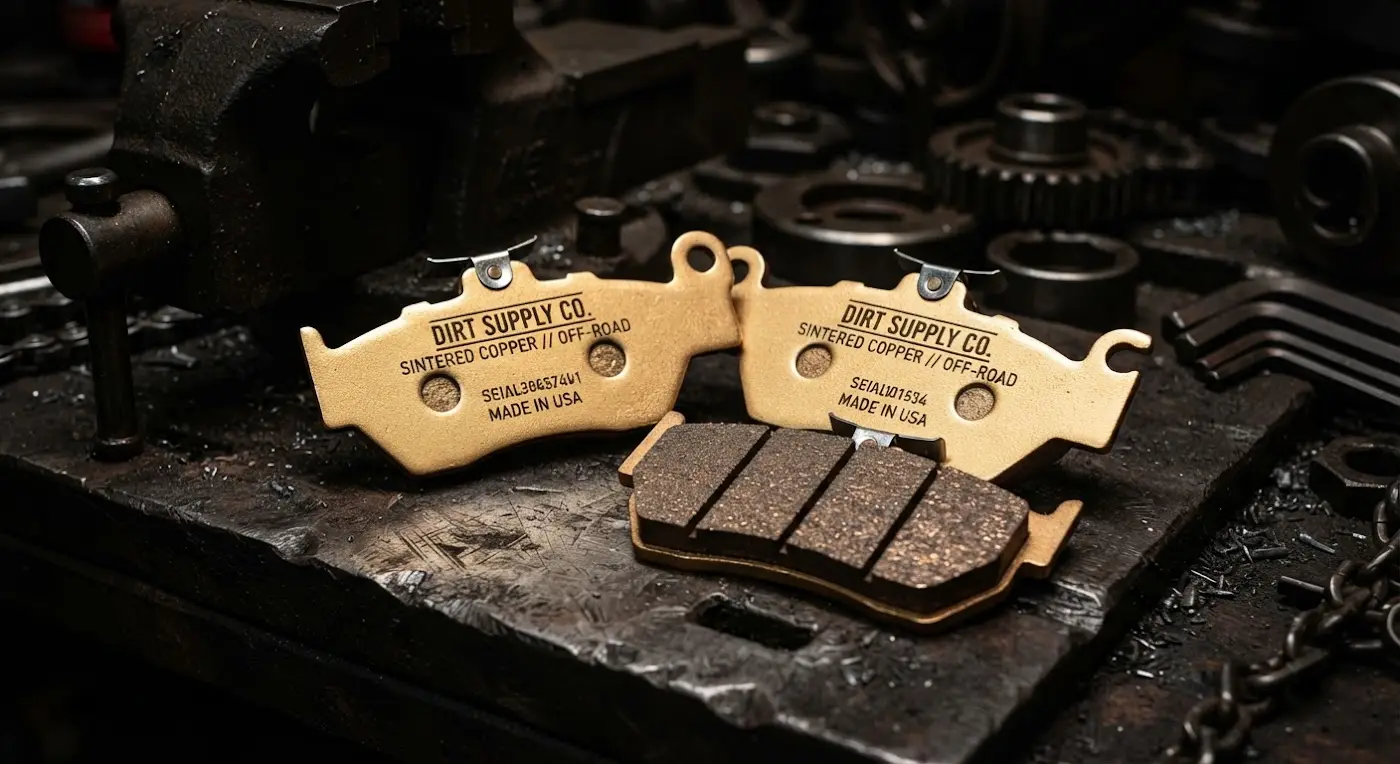
Sintered pads are made by fusing metallic particles (typically copper and bronze alloys) under high pressure and temperature. The compound is essentially welded onto the steel backing plate, creating an exceptionally tough, durable surface.
Advantages of Sintered Pads:
- Superior Durability in Any Conditions: Completely impervious to mud, water, sand, and snow. The metallic composition withstands abrasive environments.
- Heat Fade Resistance: The hotter a sintered pad gets, the better its friction coefficient performs. The pedal will not get spongy on long descents.
- Extended Lifespan: Lasts two to three times longer than organic equivalents across demanding terrain.
Disadvantages:
- Increased Rotor Wear: Metal-on-metal friction wears down brake discs more rapidly.
- Noise: At lower speeds or when soaked, they may produce a sharp metallic squeal, which is normal given their composition.
Head-to-Head Comparison: Organic vs. Sintered?
When choosing between the two, consider your machine's specifications and the terrain you explore:
1. Vehicle Weight and Intended Use
Heavy two-up ATVs or multi-passenger SXS/UTVs weighing over 700 kg require sintered pads. Stopping the sheer inertia of a heavy machine demands the high friction of sintered metal. For a lightweight, 250–400cc sport quad ridden on dry tracks, organic pads are more than sufficient.
2. Terrain and Riding Climate
If your routes mostly consist of dry gravel roads in Kakheti or scenic paths around Tbilisi, organic pads will serve you comfortably. But if you tackle the rocky trails of Didgori, the foggy mud of Bakhmaro, Manglisi forests, or frequent river crossings, organic pads will disintegrate after just a few rides. In these demanding conditions, sintered pads are the only sensible choice.
3. Pricing and Cost-Efficiency
Based on 2026 market data in Georgia, ATV and UTV brake pad prices typically range as follows:
- Pair of organic pads: On average, 60 GEL to 110 GEL.
- Pair of sintered pads: On average, 120 GEL to 240 GEL (depending on brand and model).
At first glance, sintered pads seem pricey, but because organic pads wear out three times faster on brutal off-road trails, sintered sets prove substantially more economical over the course of a season.
How to Bed In New Brake Pads
After installing new pads, do not plunge straight into deep mud. Performing a proper bedding-in process is crucial:
- Clean the brake rotor with dedicated brake cleaner spray to remove old residue and oily grime.
- Check rotor thickness with a caliper. If the rotor is worn beyond manufacturer service limits, aggressive new sintered pads will damage it further.
- On a flat road, accelerate to 40–50 km/h and smoothly slow down to 10 km/h. Repeat this 8–10 times without coming to a complete stop.
- Allow the system to cool down. This transfer layer process distributes friction material evenly across the rotor surface, ensuring maximum performance and longevity.
If you want your ATV or UTV to stop predictably on steep, technical descents, invest in high-quality sintered pads and inspect your brake rotors on a regular basis.